Global Project Leaders Must Navigate Rising Geopolitical Uncertainty, Expert Warns

Northeastern University symposium highlights new challenges facing international project management
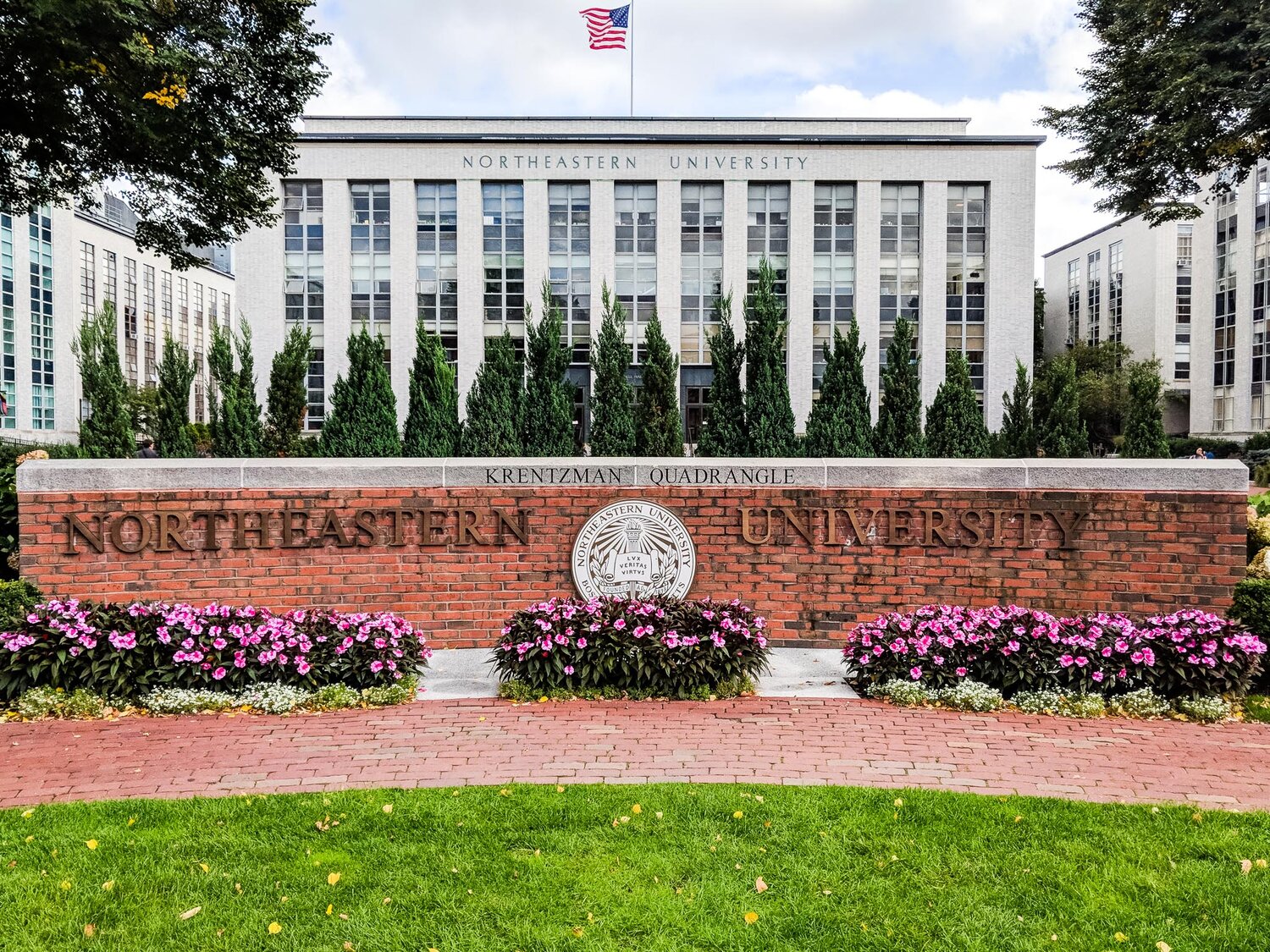
At Northeastern University’s 4th Annual Global Symposium on Leadership and Project Management leaders in the field gathered with students and academics to discuss the many challenges and opportunities facing global businesses and industry. Kicking off the event, organizers invited Dr. Lavagnon Ika, Professor of Project Management at the University of Ottawa and founding director of the Major Projects Observatory, to highlight how traditional project management approaches are inadequate for navigating today’s volatile geopolitical landscape.
“We find ourselves at an extraordinary crossroads—one where the pace of change is accelerating, and the need for adaptive, responsive, and inclusive leadership has never been greater. Project management, the discipline that transforms ideas into reality, stands at the heart of this transformation,” explained Les Stein, Assistant Teaching Professor at Northeastern’s College of Professional Studies and chair of the organizing committee for this annual event of global leaders. “This year, we were excited to invite Dr. Ika as our keynote speaker to address the unprecedented challenges of geopolitical tensions that are increasingly disrupting major infrastructure and business initiatives.”
A New Category of Risk
Ika introduced the concept of “geopolitical uncertainty” defined as the tendency for projects to encounter problems when confronting significant policy changes by powerful nation-states pursuing foreign policy objectives against rival countries. Unlike traditional project risks that can be calculated and managed, geopolitical uncertainty is largely unpredictable and beyond project managers’ control.
“We are living in times when geopolitical uncertainty has skyrocketed,” Ika told the international audience. “Project leaders have been grappling with this for ages, but what’s happening now deserves special attention.”
Real-World Impact
The presentation detailed numerous high-profile cases where geopolitical tensions disrupted major projects:
- NVIDIA’s reactive $500 billion AI investment in the US following Trump administration tariff threats
- Turkey’s $15 billion Istanbul Canal project designed to gain geopolitical leverage over Black Sea access
- The termination of Ontario’s $100 million Starlink contract amid US-Canada trade tensions
- Widespread project cancellations following USAID’s shutdown, affecting millions globally
- Boeing contract suspensions during US-China trade disputes
“When Trump levied 145% tariffs on Chinese goods, President Xi retaliated with cancellation of Boeing jets contracts worth $1 billion,” Ika noted, illustrating how quickly geopolitical decisions can derail major projects.
Beyond Traditional Risk Management
Ika argued that conventional “understand-reduce-respond” risk management approaches fail when dealing with geopolitical uncertainty. Instead, he advocates for an “understand-embrace-adapt” framework, similar to strategies used during the COVID-19 pandemic for vaccine development.
He then outlined five strategic approaches for project leaders:
- Proactive monitoring rather than waiting for problems to emerge.
- Enhanced uncertainty management using adaptive rather than rigid planning.
- Source analysis distinguishing between geopolitical and geoeconomic factors.
- Holistic navigation through expanded geopolitical literacy, landscape scanning, and scenario planning.
- Organizational capacity building including potential appointment of chief geopolitical officers.
Rethinking Project Education
A significant portion of the discussion focused on educational reform. Ika suggested that project management curricula must integrate geopolitical considerations across all courses rather than treating it as a separate subject.
“Project leaders are politicians in their own way,” he argued, challenging the common refrain that “we don’t do politics, we deliver projects.” This mindset, he suggested, leaves managers unprepared for the realities of contemporary project delivery.
Building Resilience
Drawing on concepts of anti-fragility, Ika emphasized that projects must be designed to not merely survive disruption but potentially benefit from it. He cited Toyota’s shift from “just-in-time” to “just-in-case” supply chain management, following the 2011 Tohoku earthquake, as an example of building organizational geopolitical capacity.
The symposium, which attracted participants from Toronto, Boston, China, Zimbabwe, and the Netherlands, continued over two days, with many other additional presentations on leadership and project management challenges that led to robust discussions and new collaborations and networks.
Bottom Line
As global power dynamics continue shifting and economic nationalism rises, project leaders can no longer treat geopolitics as external to their work. Success increasingly depends on developing sophisticated understanding of international relations and building adaptive capacity into project design and organizational structure.
The symposium highlighted a fundamental shift in leadership and project management: moving from viewing uncertainty as a problem to be minimized, to embracing it as an inevitable aspect of global operations and enterprise that necessitates new skills, mindsets, and strategies.