
Faces of CPS: Darius Peyton
Senior Cohort Manager, PathmakerBIO, College of Professional Studies
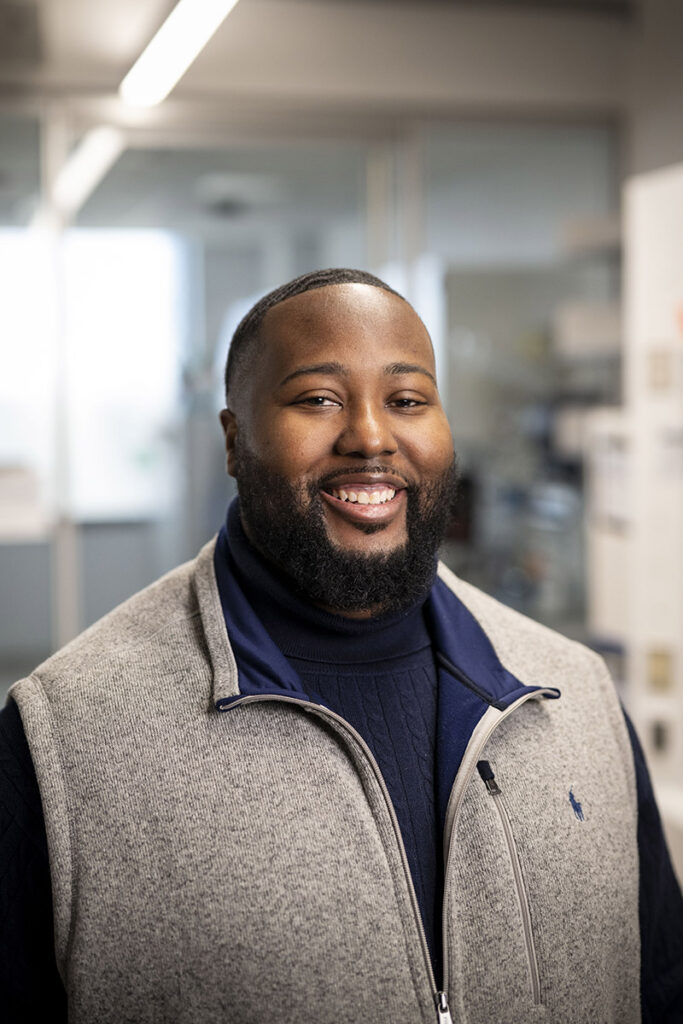
Home: Medford, MA · Originally from Amherst, MA
Three words that describe your experience at Northeastern:
Innovation. Relationships. Development.
Why PathmakerBIO?
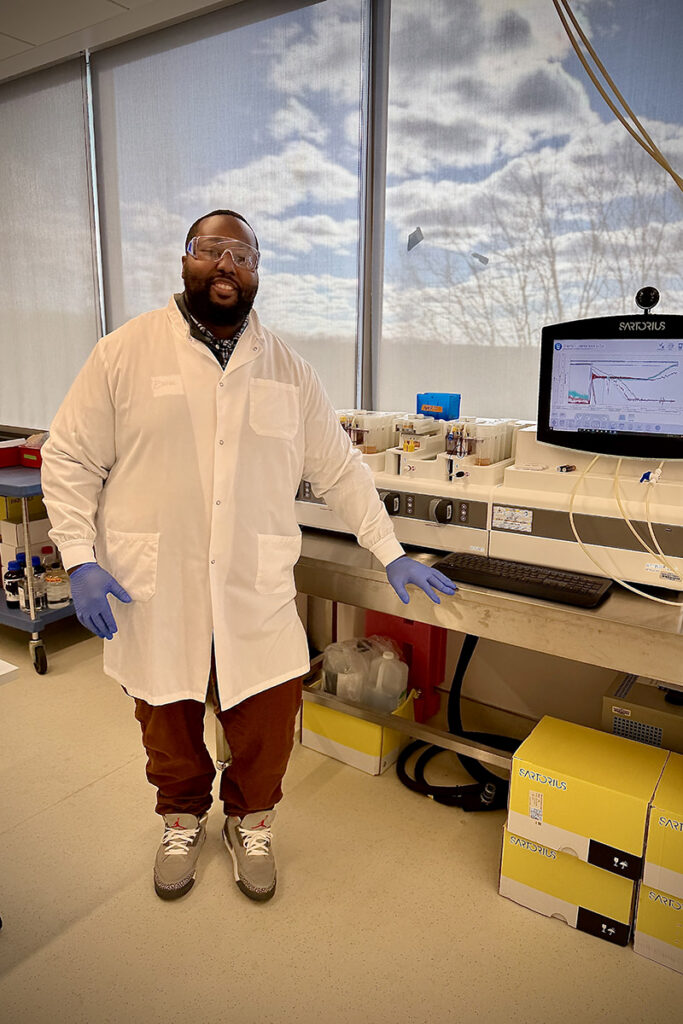
We are making real change in people’s lives. Not just through education, but through practical training and by opening access to a field where the majority of our participants have historically been excluded. That is RARE in social and human services work. AND on top of that, we provide participants with a stipend — $3,000. That is simply UNHEARD OF in this space.
I also came because this is a movement. The way higher education has operated needs to evolve to meet current times, and CPS and PathmakerBIO are ahead of the curve. This work is making a real impact in my community and across the Massachusetts workforce. I had to be a part of it.
What was your biggest challenge before joining Northeastern?
Navigating the later stages of nonprofit work. I reached a point where I began questioning whether I was able to make the kind of impact that originally drew me to the work. At times it felt like I was navigating the same systemic cycles I had hoped to help disrupt. The broader landscape of politics, education policy, and funding made the work increasingly complex, and it pushed me to reflect more seriously on where my skills could be most effective. It also helped me recognize how much sustainable impact depends on the structures around the work, including leadership, organizational capacity, and the level of support practitioners receive over time. While that period came with real internal challenges and reflection, it was also formative for me and shaped my growing interest in leadership, systems thinking, and institutional change.
I found ways to stay grounded. I built community with people who shared my values, focusing on the direct impact we had on clients, and turning to academics to better understand the systemic roots of what I was experiencing. Eventually I had to acknowledge that I was burned out and that my growth was pulling me in a different direction than the organization. Leaving was hard. But it brought me here.
What challenges have you faced at CPS?
Honestly, I’m fairly new to CPS and I haven’t encountered major challenges. Coming from where I came from, I’m well-practiced at handling adversity — so when bumps come up, I see them as part of the road, not as stops. What I appreciate most is the continuous improvement mindset here. It’s easy to embrace a growth orientation at CPS because I genuinely feel like my colleagues and I share a common understanding of what that means in practice and foster a safe environment for exploring curiosities and taking risks.
What has your journey at Northeastern revealed to you?
That I thrive in innovative spaces—places that welcome asking questions and trying new approaches. In previous roles, some of my instincts weren’t always fully understood, whether in how I led, approached complex problems, or built authentic relationships with the people I served. I was driven by a desire to explore leadership thinking and figure out whether a particular course of action was truly the best path forward for all stakeholders, including those working at the grassroots level. At times, that meant facing pushback, but it also pushed me to reflect and refine how I lead.
Over time, I’ve seen that these instincts are rooted in thinking critically about systems while staying grounded in the human experience. Coming to Northeastern, those same qualities are recognized as strengths, and being in an environment that values innovative thinking and relational leadership has let me lean into them fully while continuing to grow. It also reinforced something I already believed but hadn’t fully articulated: you never know who’s watching and you never know who’s in the room. NU is so well-connected that meaningful relationships can develop in unexpected ways. That’s been a real gift.
“If you want to be in a space that wants to develop you — the person, not just the academic — CPS is the place for you.”
Darius Peyton
What is the most valuable thing you’ve learned?
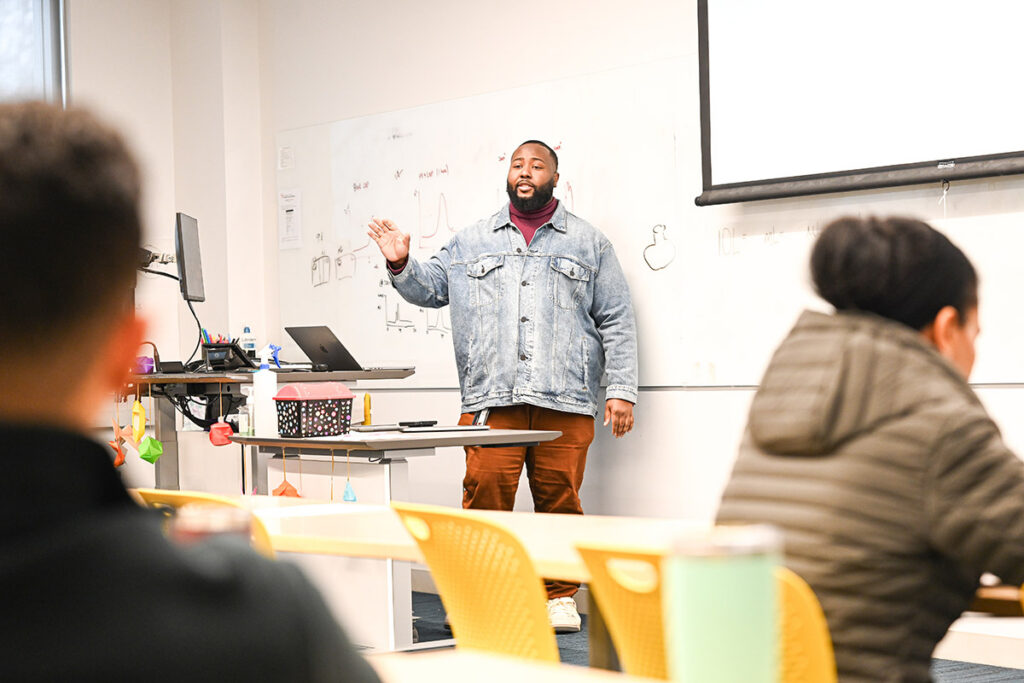
That transformation happens on two levels simultaneously. At the macro level, it’s about systems — how programs are designed, how access is structured, how institutions evolve to better serve the people they exist to support. At the micro level, it’s about individuals — how people see themselves, what they believe is possible, and how they take ownership of their own path. My work is grounded in holding both at the same time.
My academic background reinforced this. Earning a 4.0 in my Master of Arts in Critical and Creative Thinking was more than a milestone. It was proof that I could contribute to my field not just through professional experience, but through scholarly research and writing. The student who once said he wasn’t a school person became someone capable of producing work that bridges theory and practice.
Where do you see yourself in five years?
Hopefully having earned a doctorate — a DPS is the goal. I’d love to still be at Northeastern, championing PathmakerBIO and seeing it expand beyond biotechnology into other Pathmaker opportunities across different fields. A Director role is in the picture. The work is too important to step away from.
What advice would you give others considering CPS?
If you want to be in a space that wants to develop you — the person, not just the academic — CPS is the place for you. I say that having experienced environments where my goals outside of work were never once asked about. At Northeastern, my leadership team actively checks in on my personal ambitions alongside my professional ones. That’s not something I’ve had before. And it matters.
