Rooftops, Rubber Trees, and the Limits of AI
By Allison Ruda, LEAN Lab Co-Founding Director | Northeastern College of Professional Studies
March 2026
In 2023, Kerri Lamprey, Director of English Learner Education in Burlington Public Schools, noticed a troubling pattern: students were leaving the district. In a single year, eight students dropped out—and all had emigrated from the same rural region of Guatemala.
A former Burlington student from that village, now working alongside Kerri in the district, wasn’t surprised. “It’s a different world,” he told her—a village shaped by rural poverty and limited access to infrastructure, libraries, and educational resources. “You have to experience it.” So she did.
On her first visit, Kerri brought a children’s book to read aloud at the local school. She was stunned when the entire student body turned out. There were no libraries within walking distance and only one dusty bookcase in the school, stocked with a handful of textbooks. With each visit, she brought more books, and more children came. Parents asked her to return in the summer to host literacy activities, and soon the Summer Academy was born. Now, three years in, Kerri and a team of volunteers from the village are building a permanent space for literacy activities.
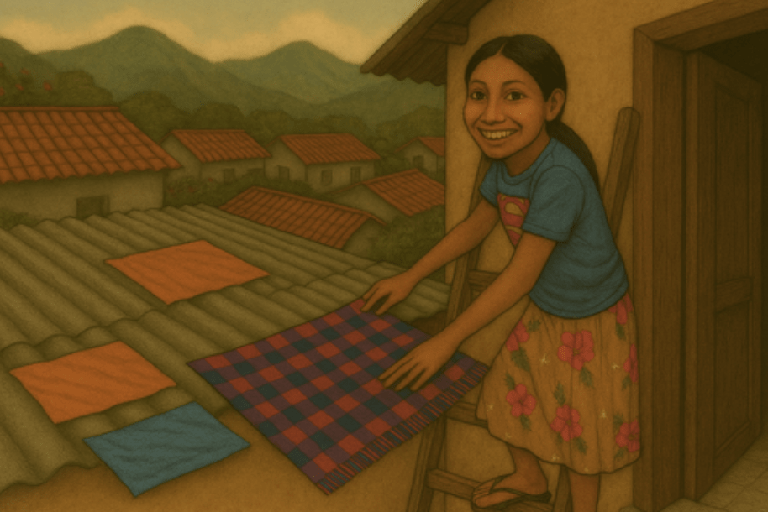
Over multiple trips, Kerri started to notice that, while the children were eager to hear stories, they didn’t always connect with the Spanish-language books she brought. One morning brought things into focus: “I woke up and saw six- and seven-year-olds on the roof, putting the laundry out to dry in the sun,” she recalled. “That’s not a chore that was mentioned in any of the books I’d brought.” She’d been searching for stories that reflected the lives of these children and just wasn’t finding them. That realization linked her work in Guatemala to her work in Burlington. If children don’t see their lives in the stories they read, how can we expect them to engage?


Negotiating Meaning Between Story and System
I met Kerri when she was a student in the AI in Education Special Topics doctoral course I co-teach with Chris Unger. The course is project-based and deliberately exploratory, designed to help students examine the practical value and limitations of generative AI in real educational contexts. Students can work on LEARN Lab–sourced projects or pursue inquiries they design themselves using AI as a thought partner. Kerri entered the course with a clear question: could generative AI support her work with families to create culturally authentic stories for children in this village?
Over six weeks, Kerri worked with three families in a back-and-forth process conducted mostly online. She provided questions and prompts (Tell a story your grandparents always tell), and families responded on their own time via WhatsApp voice notes—a platform they already use. Kerri brought these responses into the Claude LLM, prompting it to generate multiple draft stories grounded in families’ descriptions. At first, she shared full drafts for feedback, but quickly realized this made the editing process overwhelming. She shifted to a page-by-page review that slowed things down so families could respond to specific moments, commenting on what resonated or what missed.
And things did miss. In several drafts, AI defaulted to generic, plausible-sounding details that flattened the local context. In one, it described children ‘sweeping the house’ as their chore; a young boy immediately corrected this: “Oh no, no, no—I feed the chicks, the baby chicks.”
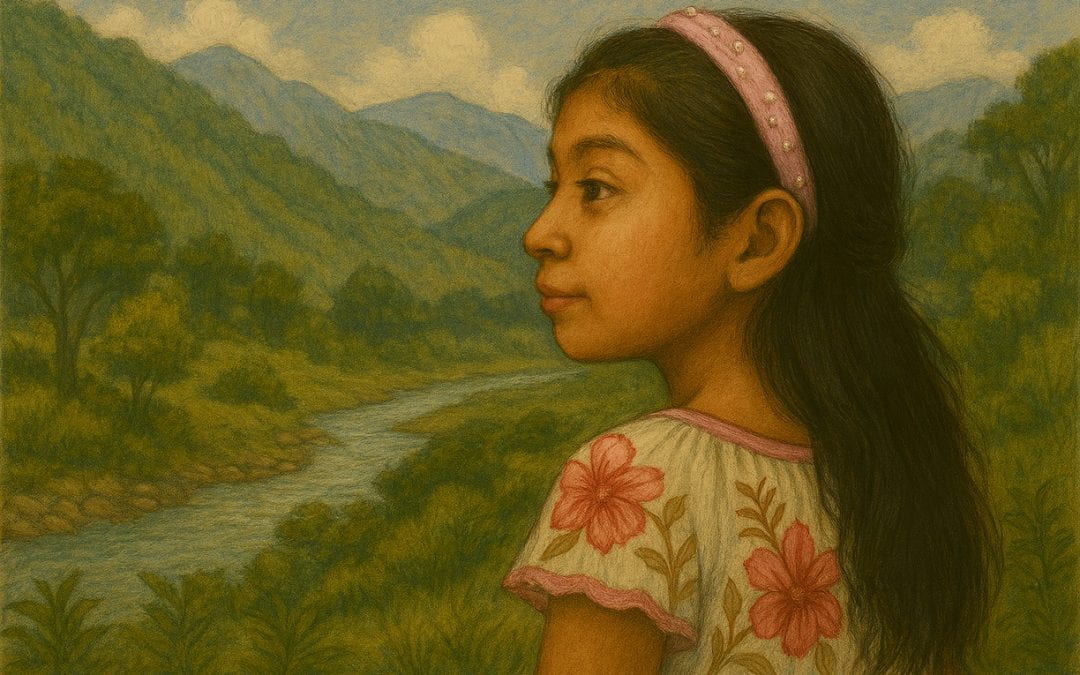
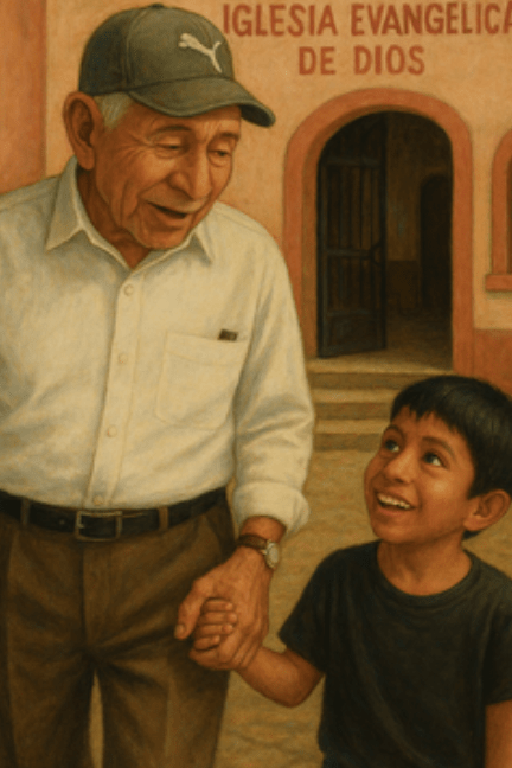
“Sometimes it wasn’t that anything was wrong,” Kerri explained. “It was just that, oh yeah, but also on Fridays we do this too, and not just that.” Over time, her prompting grew more deliberate. She replaced generic details with place-specific ones (rubber trees rather than coffee plantations). That same specificity extended to the illustrations she generated. Families reviewed variations with Kerri until they landed on ‘narrative realism with folk art undertones’ as the visual style. Similar patterns surfaced visually: AI-generated illustrations showed children wearing traditional Mayan clothing, despite this not being common practice in the village. The families are of Mayan descent, but the model defaulted to widely circulated visual markers rather than the community’s actual appearance. As Kerri noted, “The specificity wasn’t there,” and building it back in required every round of feedback.”
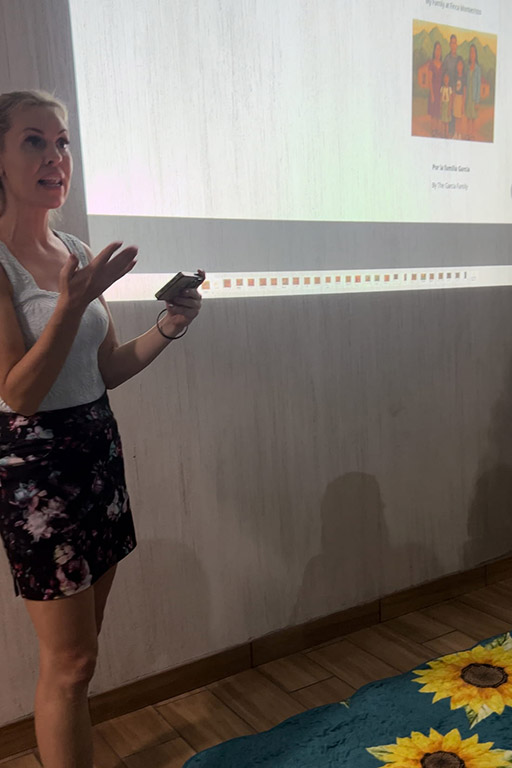
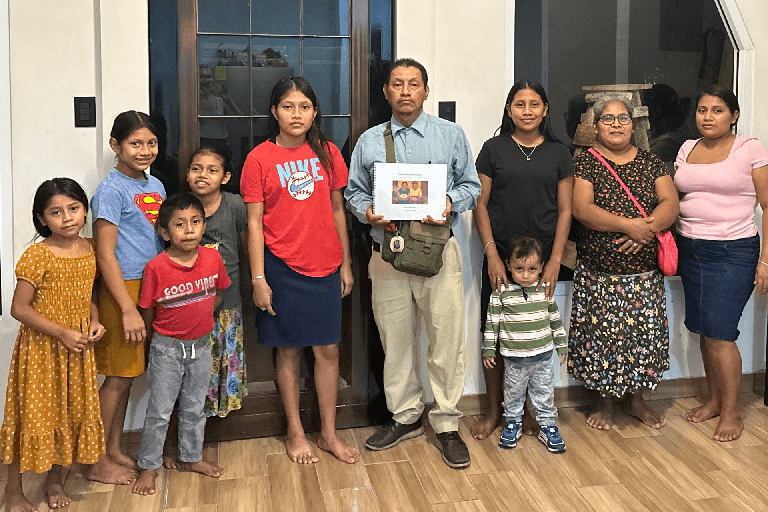
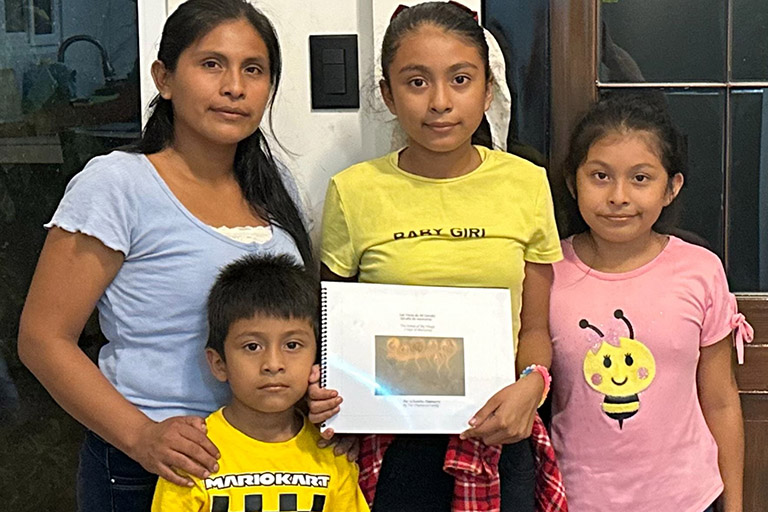
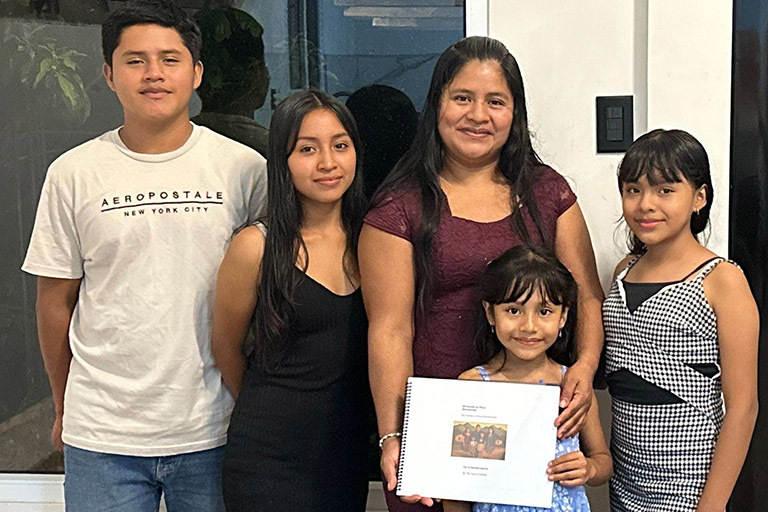
As the project came to an end, the dialogue moved off the screens and into the community. Kerri returned with printed, bound copies of each family’s story. Participating families gathered for a celebration during which the children’s pre-recorded voices narrated scenes drawn from their own rooftops, kitchen tables, and rubber tree fields—their relatives laughing at recognizable details.

Rethinking What Counts When AI Enters the Classroom
I’m writing about this project because it surfaces something we all risk overlooking in conversations about AI in education: the distinctive value of a teacher. It highlights an educator engaged in iterative, collaborative work with students, families, and AI, where the aim is exploration, not efficiency. Here, the teacher is guiding inquiry without any predetermined answers.
Kerri’s project resonates with my long-standing interest in teacher agency, and the idea that teaching is not just implementation, but design. Teaching is often framed around adherence to curriculum and standardized outcomes, with teachers positioned as implementers. In this case, teaching meant designing an experience of meaning-making that unfolded over time. Generative AI didn’t replace human expertise; it made it more necessary. Kerri’s work depended on relational judgment, ethical discernment, and the willingness to slow down when speed might undermine trust. These are skills that resist automation.
As Kerri described her approach, it struck me how closely the process resembled creative work. The teacher, like an artist or designer, works iteratively and cyclically—sketching, revising, inviting critique, reshaping. The “medium” in this case included LLMs, but the practices of interpreting lived experience and giving it form remained the work of humans.

Teachers, at their best, are artists. Shaping learning that connects with students requires understanding their lived realities, and that interpretive and relational effort cannot be outsourced to technology. The presence of AI made the teacher’s role more visible, not less.
The tensions AI poses for educators won’t resolve any time soon, but projects like this clarify what’s at stake. As the course wrapped up, Kerri admitted she continues to wrestle with AI’s place in this work. Even though the families’ voices were central throughout, she remained a go-between with the technology. “That’s where I was struggling,” she reflected. “Am I really empowering the families to tell their stories, or am I just…walking them through a process?”
The question itself is instructive. It reframes success in terms of agency rather than output. Maybe a teacher’s role isn’t to deliver conclusions, but to design conditions where meaning can be contested and voice remains with the people who live the story. Questioning outputs, asserting authorship, offering lived perspective are capacities students need to develop, too. That’s as true in this village as in Kerri’s classrooms in Burlington, where questions of representation first surfaced.
What this project suggests about teaching—that the teacher’s interpretive and relational work becomes more consequential, not less, with AI in the picture—speaks directly to what Kerri first encountered in Burlington, where the gap between students’ academic and lived experiences was so wide it limited their ability to succeed. AI won’t close these gaps. Teaching can—but only the kind willing to slow down long enough to find out what’s actually missing.