
Faces of CPS: Jimmy Yan
Graduate Student | MPS Applied AI, Class of 2027

Where are you from?
I am from Shanghai, China.
What three words would you use to describe your Northeastern experience?
Hands-on | Interdisciplinary | Momentum
What drew you to pursue your degree?
I chose cognitive science and applied artificial intelligence because I’m obsessed with how minds learn and how we can design systems that learn to help people. Cog-sci gave me theory; the MPS-AAI program lets me turn that theory into products, from data pipelines and LLMs to user-facing tools.
What inspired you to choose Northeastern specifically?
I chose Northeastern for its “learning by doing” culture, the Boston ecosystem, and faculty who push prototypes over slide decks. I’ve gained access to mentors like Uwe Hohgrawe and Anton Sinitskiy, industry-facing events, and space to build quickly. The challenge for me is how can I use what I have learned in the past in an industry environment (Experiential learning projects).
What was your biggest challenge before enrolling at Northeastern?
My biggest challenge was turning three threads, cognitive science, applied AI, and finance, into a single coherent path. I overcame it by building and shipping real things. At UCLA I automated EMG pipelines for neuroplasticity and SCI rehab with Dr. Ruyi Huang. At Spatial Laser I deployed a Vertex AI + Python workflow to extract rent concessions and compute effective rent at scale. Making working prototypes with clear evaluation loops gave me direction and confidence.
The most valuable thing I have learned is to reach out widely and also explore broadly across fields and opportunities, talk to people, take on small projects, try different roles, and pay attention to what actually energizes you.
Jimmy Yan
Were there any ongoing challenges during your time at CPS?
Teamwork in class projects has been a challenge. It is hard to balance workloads fairly, and as a group leader I need to make sure everyone follows through just like in a real working environment. I handle this by setting clear deliverables and owners at the kickoff, agreeing on timelines and quality bars, using a simple shared tracker, and holding short check-ins to realign when needed. If the workload becomes uneven, I rebalance tasks, pair people to unblock each other, and build in a small risk buffer. When someone is stuck, I jump in early, offer concrete help, and document next steps, so accountability remains clear without blaming anyone.
What has your journey at Northeastern revealed about yourself?
I’ve learned that I’m strongest at the intersection of research, engineering, and product. I like translating across those worlds, framing problems crisply, building the first working version, and instrumenting it so decisions are driven by evidence.
What is the most valuable lesson you learned at Northeastern?
The most valuable thing I’ve learned is to reach out widely and explore broadly across fields and opportunities. Talk to people, take on small projects, try different roles, and pay attention to what energizes you. Start early, keep a bias toward action, reflect after each experience, and be willing to say no when the fit is not there. That loop of trying, learning, and refining has shaped my path more than any single class because it turns curiosity into clarity about what I truly want to build.
I chose Northeastern for its “learning by doing” culture, the Boston ecosystem, and faculty who push prototypes over slide decks.
Jimmy Yan
Where do you imagine yourself five years from now?
I see myself leading an AI product team, building human-centered, evidence-backed systems in education and health, while staying close to data, evaluation, and users.
How has Northeastern prepared you?
Northeastern is preparing me through doing real work. Experiential learning projects taught me to scope problems, deliver increments, and learn from feedback. Working in teams trained me to communicate, rebalance workloads, and hold clear standards. The co-op program gives me hands on industry exposure, and meeting people at conferences helps me build connections with practitioners, so I understand expectations, opportunities, and how to navigate the path from classroom to impact.
What advice would you give to others considering higher education?
Arrive with one problem you genuinely care about and use classes as scaffolding to build a public portfolio and seek early feedback from faculty.
What motivates you?
I’m motivated by measurable impact and fast feedback. I love watching a messy process become reliable. Manual rent parsing turned into a repeatable batch job. Noisy biosignals became interpretable summaries. A story idea turned into a usable app. Shipping, testing, and iterating keep me energized.
What are some of your hobbies and other passions?
Morning workouts, guitar, basketball, skiing, and reading about consciousness and cognitive neuroscience. I also enjoy designing tiny tools that remove everyday friction.
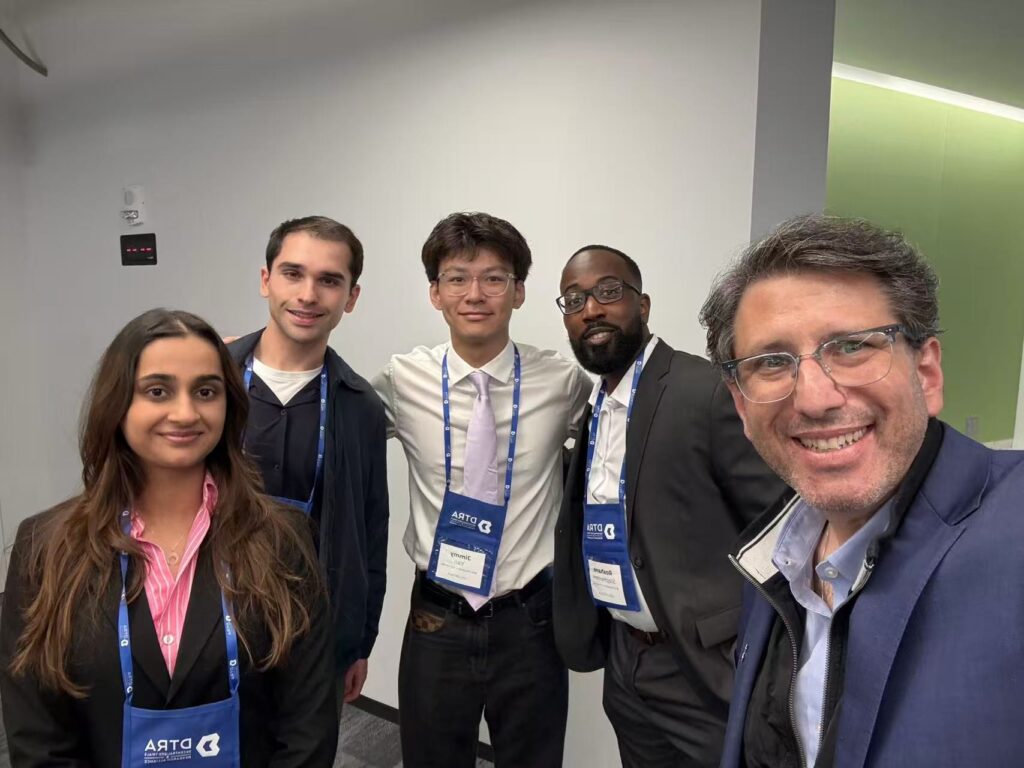
Is there anything else you’d like to share?
My “so what” is my AI TTS app. I am building a product that turns text into lifelike, consistent voices with controllable style and safe guardrails, aimed at creators, educators, and families who need reliable narration without studio costs. My biggest accomplishments are shipping a working MVP, standing up an inference pipeline with promptable voice profiles, and running early user tests that proved we could keep character voices consistent across episodes while maintaining natural prosody. A journalist should cover this because it is a clear student founder story with a demoable product, real users, and an ethical approach to voice technology that makes high quality narration accessible at scale.
Tell us your story in your own words.
I started with questions about how minds work and moved into building AI that helps people in concrete ways. At UCLA, I worked on EMG pipelines to analyze neuroplasticity in SCI rehab. At Spatial Laser, I built an NLP and Vertex AI pipeline that turned long, inconsistent listing text into structured concessions and effective rent calculations. Now I’m prototyping a children’s AI storytelling app that blends LLM text with consistent character design because I believe tech should feel personal, safe, and a little magical. Northeastern accelerated my dream of applying AI to real world problems.
Connect with Jimmy:
Instagram: @jimmy_yan_
LinkedIn: Yucheng Yan
