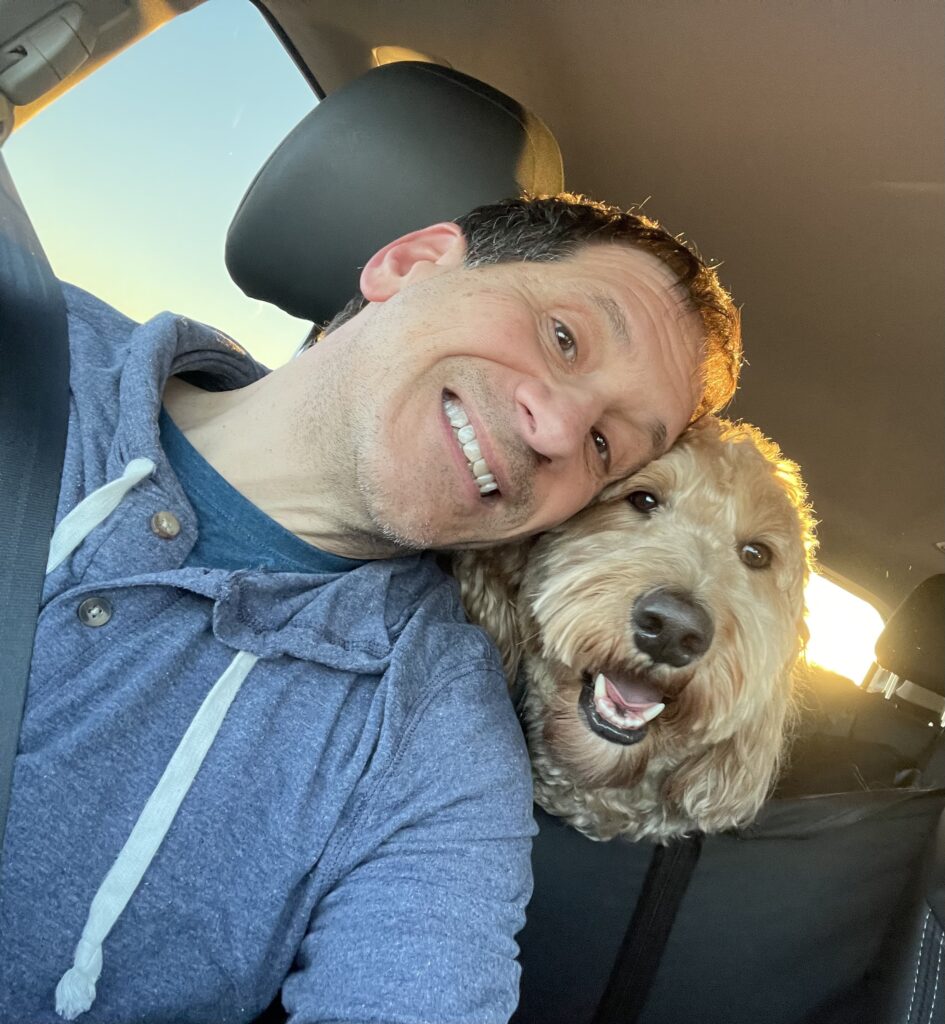
Mark Tarallo: Exploring Proven Strategies that Enable Remote Workers to Take Active Breaks during their Workday

What motivated your research on remote work and breaks?
At the time I began formulating my research idea, I had been a full-time remote worker for over 10 years, and worked in a hybrid capacity for at least 15 years prior to that in the technology industry—clearly, this was all before COVID was even a thing. Being new at remote work, my colleagues and I would talk about working too many hours without coming up much for air. We’d have conversations about how hard it was to set boundaries and turn off periodically throughout the day, since there weren’t many obvious boundaries or cues to take breaks like you have in a traditional office.
What specific challenges did you observe?
It was easy to always tell ourselves, “I’ll do this one more thing, and then I’ll take a short break.” Sometimes, remote workers might not even stop for lunch; we’d just grab something in the kitchen and eat while on a conference call. As years passed, my colleagues and I learned, by trial and error, how to better navigate our workdays. This made me want to formally investigate how people learned to make it work for them and how they overcame any struggles with remote work.
What was your research question?
I wanted to see what made longtime remote workers successful at navigating their workdays and taking breaks, and then determine if newer remote workers could benefit from these proven strategies. Honestly, why should new remote workers have to go through the same struggles when they can benefit from longtime remote workers’ lived experiences?
How did you structure your research?
My research had two cycles. In Cycle 1, I collected data from very experienced remote workers on how they managed their days and what strategies worked for them in order to take consistent breaks. Then COVID hit, which really informed and influenced Cycle 2. I created and moderated a podcast series featuring longtime remote workers sharing their lived experiences and how they overcame obstacles and created strategies to take control of their workdays and make sure they took breaks. These podcasts were shared with new remote workers, and I then looked at the impact of the podcasts on the new remote workers’ approaches to work breaks.
What were your key findings?
I found that an individual’s work environment, level of autonomy, and their break options have a huge impact on a remote worker’s break-taking during the workday. Overall, the implications were that autonomy is critical for remote workers, that remote workers need consistent organizational support, and that all breaks are not created equal—in other words, individuals should tailor what they do on their breaks, physical or otherwise, to what benefits them most.
What misconceptions about remote work did your research address?
Non-remote workers may think that remote workers have it easy, that they can slack off during the workday, that they benefit from no commute, and don’t have to think about what to wear. But of course, that’s not an accurate representation. It’s really a lifestyle that a remote worker has to carefully manage with boundaries and breaks. You have to intentionally and deliberately cultivate the autonomy that comes with remote work in order to gain its full benefits and for you to be able to deliver what your employer expects.
Why does this matter, especially for people who view work as just work?
For many people, work is work, and not necessarily a passion. Especially in those cases, it’s important to make sure we take care of ourselves and make sure our employers don’t take advantage of us, or overwork us, and that we take the breaks that we need.
How does this research connect to your current work?
While my focus is on remote work, I consider my study to be part of a much larger body of research that relates to the future of the workplace in general. In my role as a faculty member in the School of Business at The College of New Jersey, the workplace is a huge part of all my teaching. I teach undergraduate business students who will go on to become marketers, venture capitalists, and managers of the future. They’ll absolutely have to learn how to manage their workdays, whether they work remotely or not, and gain the trust of their colleagues. So I infuse concepts like this into my classroom.
What’s next for your research?
I’ve been thinking about the next phase of my research and what that might look like. I may revisit some of the people who participated in my research as new remote workers to see how they are faring years later and what they had to do to maintain their remote work status and breaks. I’d also like to delve much more deeply into the types of activities people do on their breaks and if that impacts their work productivity and/or engagement post-break. It would be interesting to have my undergraduate students get involved in this next phase.
Is this research still relevant post-pandemic?
Absolutely. Though fewer people are working from home now than during the height of the pandemic, remote workers still make up a large part of today’s workforce, so this is all still extremely relevant.
Connect with Mark: LinkedIn