
Faces of CPS: David Thuku
PathmakerBio Program, College of Professional Studies
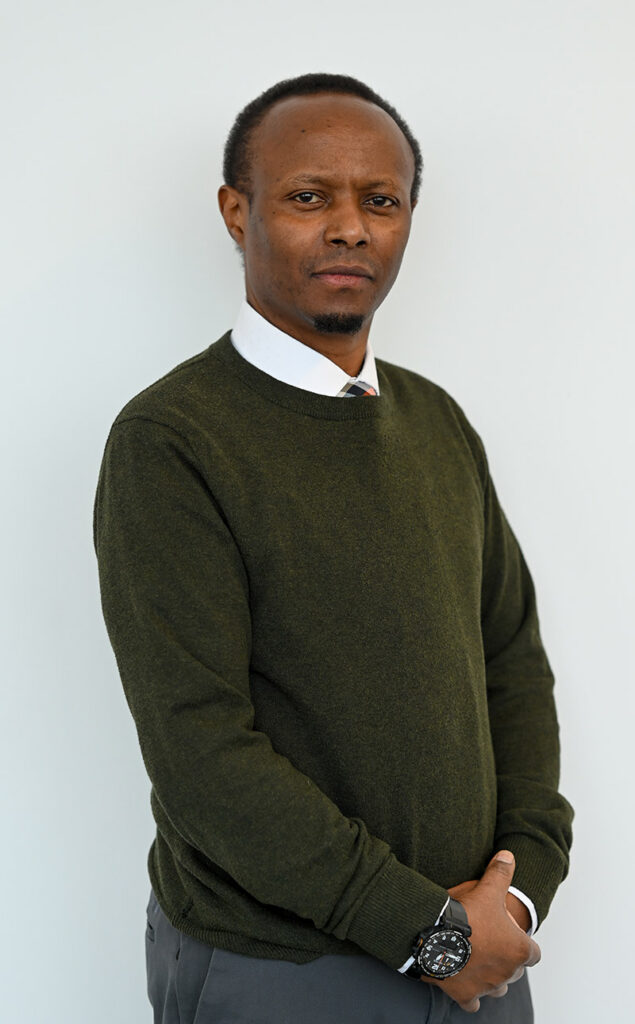
Home: Grafton, MA · Originally from Kenya
Three words that describe your experience at Northeastern:
Resilience. Humbling. Eye-opening.
Why Northeastern?
I had been following Northeastern’s reputation through various professional networks for some time, so when the opportunity to join PathmakerBio came, I didn’t hesitate. What drew me in was the combination of academic rigor and real-world application. The program confirmed skills I had built over a long career in human services — communication, leadership, teamwork — while introducing me to an entirely new field. Even the logistical challenges of getting started pushed me beyond my comfort zone in ways that turned out to be valuable.
Why biotechnology?
Throughout my 15-year career in human services, I worked closely with individuals whose lives were shaped by advances in healthcare and biopharma products. Over time, my curiosity about where those products came from — who developed them, how they were made, what quality standards governed them — kept growing. By the time the COVID-19 pandemic created space for a career shift, that curiosity had become a clear direction. Biotechnology felt like the next chapter I’d been building toward without fully realizing it.
What was your biggest challenge before coming to Northeastern?
Before enrolling, my most significant challenge was the process of becoming a US citizen. It demanded continuous learning, repeated adaptation, and an ability to hold a long view when everything felt uncertain. I had to develop real discernment — learning to separate facts from assumptions and stay solution-focused even when the path forward wasn’t obvious. Looking back, those years were a different kind of education, and the skills they built showed up directly in my work at CPS.
What challenges did you face in the program?
Self-doubt was the most persistent one. There were moments in the program when the obstacles felt genuinely insurmountable — the pace was demanding, the subject matter was new, and I questioned whether I belonged. What I learned is that the antidote to self-doubt isn’t confidence. It’s motion. Pausing, reorienting, and starting again. Every time I did that, the next stage became a little clearer.
There was also a practical transition to navigate. Moving into a new field after 15 years in another one means proving yourself again. But I found that the soft skills — listening, leading, working through complexity with other people — don’t expire. They translated.
“Join. Start. Persist.”
David Thuku
What has your journey at Northeastern revealed to you?
Mostly, it revealed that mental fortitude is the deciding factor. The technical knowledge is learnable. What determines whether you finish is whether you keep showing up when it’s hard. The final stages of the program, which once seemed out of reach, became manageable — not because they got easier, but because I kept moving through them.
It also reaffirmed something I had long believed but hadn’t put to the test: that unconventional paths are legitimate ones. I didn’t come into biotech through the traditional route. That distinction matters less than the dedication you bring once you arrive.
Where do you see yourself in five years?
Within the biotechnology sector, contributing to quality assurance and quality control. That’s where my experience working in human services — where accountability and precision matter enormously — feels most directly applicable. I’m drawn to the work of maintaining standards that protect people.
What advice would you give others considering PathmakerBio?
Three words: Join. Start. Persist. The hardest part is the first step — not because the program is unwelcoming, but because the internal resistance to change is real. Once you’re in, the momentum builds. I’ve experienced significant life transitions before, and Northeastern provided exactly the kind of environment I needed to make this one work. There’s no turning back from here.
What do you do outside of your studies?
I’m a car enthusiast — the kind who rarely lets a mechanic touch a vehicle I own. I like to cook and experiment in the kitchen. And I’m an amateur photographer. Nothing captures human emotion quite like a well-placed candid shot. I think there’s something in common between that and the work of quality control: both require you to pay close attention to what’s actually in front of you.
