
Katie Trowbridge on Closing the Creative Thinking Gap in Workforce-Aligned Education
Research Focus: Creative Thinking in Education • Workforce Readiness
“Closing the Creative Thinking Gap: Exploring Educator Perceptions and Professional Development in Advancing Workforce-Aligned Education”
What challenge did your research address?
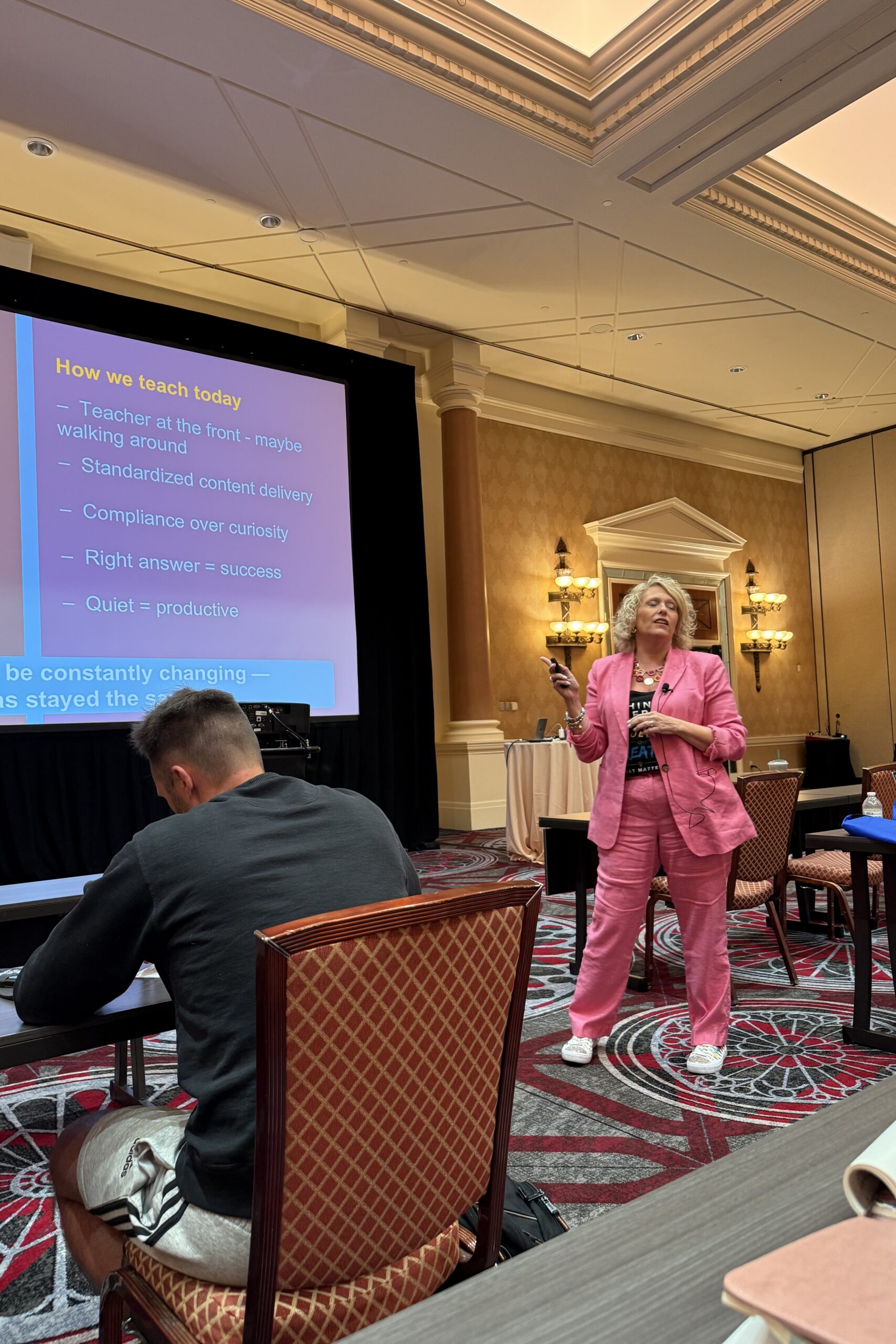
My research addresses a growing disconnect between the skills students need and the learning experiences many schools provide. Today’s students are entering a rapidly changing world that demands curiosity, creative problem-solving, adaptability, collaboration, and critical thinking, yet many classrooms remain centered on compliance, standardized outcomes, and finding one correct answer. Many educators recognize the importance of creative thinking but haven’t received the training or practical strategies to intentionally develop it in students, in part because creativity is often misunderstood as an artistic talent rather than a teachable process. My research examines how targeted professional learning can strengthen educators’ understanding of creative thinking and their ability to foster it in the classroom.
What inspired you to pursue this research?
After more than two decades working with students and educators, I watched naturally curious children gradually grow hesitant to ask questions, take intellectual risks, or explore ideas without first seeking the “right” answer. At the same time, I saw committed teachers who wanted to create more engaging learning experiences but lacked the training, time, and tools to intentionally develop creative thinking. That gap inspired me to investigate how professional learning could help educators understand creative thinking as a teachable, transferable skill, and to offer a practical path forward rather than simply naming the problem.
What did your research find, and what is its impact?
When educators receive intentional, practical professional learning, they develop a stronger understanding of creative thinking and greater confidence bringing it into their classrooms, seeing it not as an artistic talent but as a teachable process every student can develop. Creative thinking doesn’t have to be one more thing added to an already packed school day; it can be woven into what teachers are already teaching through better questions, student choice, and open-ended challenges. The research gives schools and educational leaders a practical starting point for professional learning that prepares teachers to build the skills students need in a fast-changing world.
“Creative thinking should not be treated as an extra or reserved for a select few. It belongs at the heart of learning for every student, in every subject, and at every grade level.”
Katie Trowbridge
Full dissertation: https://drive.google.com/file/d/1e_Ty-uQGX9yN7WMYedSUcXyQACXzJedA/view?usp=sharing
