Project Managing the Project Management Club
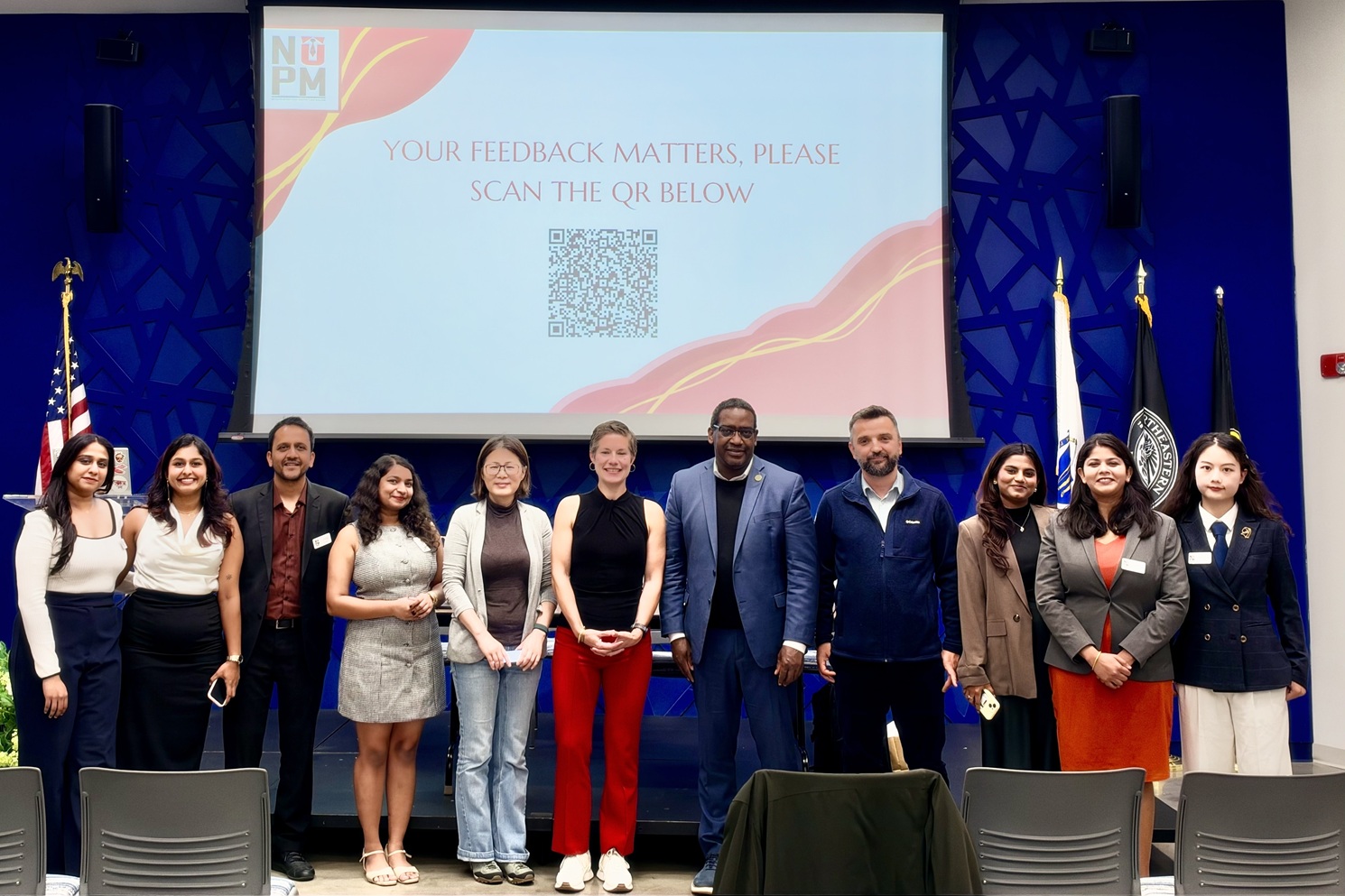
The graduate students leading NUPM, CPS’s student-run project management organization, bring careers spanning finance, civil engineering, professional kitchens, and marketing. This year, they want to turn the club into the resource they wish they’d had.
Ask the five board members of Northeastern University Project Management (NUPM) club how they got into project management, and you won’t hear the same story twice.
Maria Juzer Motiwala started as a stock trader in India before moving into business analysis and management consulting. Devang Patel spent nearly nine years as a civil engineer building highways, airports, and railway infrastructure. Poorvajaa Raman worked as a chef in hotels across the United States, Doha, and India. Sai Anusha Chimata ran paid marketing campaigns after earning an MBA. Priyanka Ghosh moved from teaching and sales into people management and operations.
Now all five are graduate students in CPS’s project management program, and together they lead NUPM, a student organization that helps students in any major with an interest in project management build community, sharpen their skills, and connect with professionals beyond the classroom. For a board this varied, that range of experience is the point.
“Project management is one field of study where we are all from different backgrounds and industries,” said Motiwala, NUPM’s president. “It automatically broadens your perspective.”
One skill set. Every industry.
For each board member, the draw to project management came from seeing how well the discipline travels.
Motiwala saw it during her consulting years, when her team served clients as varied as furniture makers, diamond traders, architects, luxury importers, and a government-subsidized pipeline project. “We didn’t have expertise in the industries of the clients we were working with,” she said. “But the one thing that was common was project management. It made me realize what a beautiful, versatile skill it is. It gives you a path to walk on, but there’s always room for creativity, because every client and every project is different.”
Patel, who also has a passion for music, came to the same conclusion from a construction site. After years of chasing contracts and completing similar jobs, he wanted to upskill, and he recognized that what he already knew could transfer. “Managing a construction project is not too different from managing a software project, or managing a team in an office,” he said. “I could see myself building a dam, and I could also see myself organizing a festival somewhere.”
“It made me realize what a beautiful, versatile skill it is.”
Maria Juzer Motiwala, NUPM President
Chimata found her way in through the coordination side of marketing, managing budgets and collaborating with colleagues across countries. “Even when we speak the same language, we have different ways of delivering the message,” she said. “There’s so much cultural exchange that happens as part of the role. That motivated me to get an international education and hear different perspectives on how people solve problems.”
For Ghosh, now working in a learning and development co-op where she helps train company leadership, the payoff is seeing classroom concepts hold up in practice. She recently adapted elements of agile methodology for a project in a field where agile doesn’t typically apply. “It’s very satisfying to see what you learn actually have an impact,” she said.
She also argued that the moment is right for the discipline. “Job roles are really diverse these days. Companies want an analytics professional with public speaking skills. It used to be that if you were a tech person, you were a tech person,” Ghosh said. “That’s where the project manager comes in. This is the best time to be a project manager.”
What a club offers that a classroom can’t
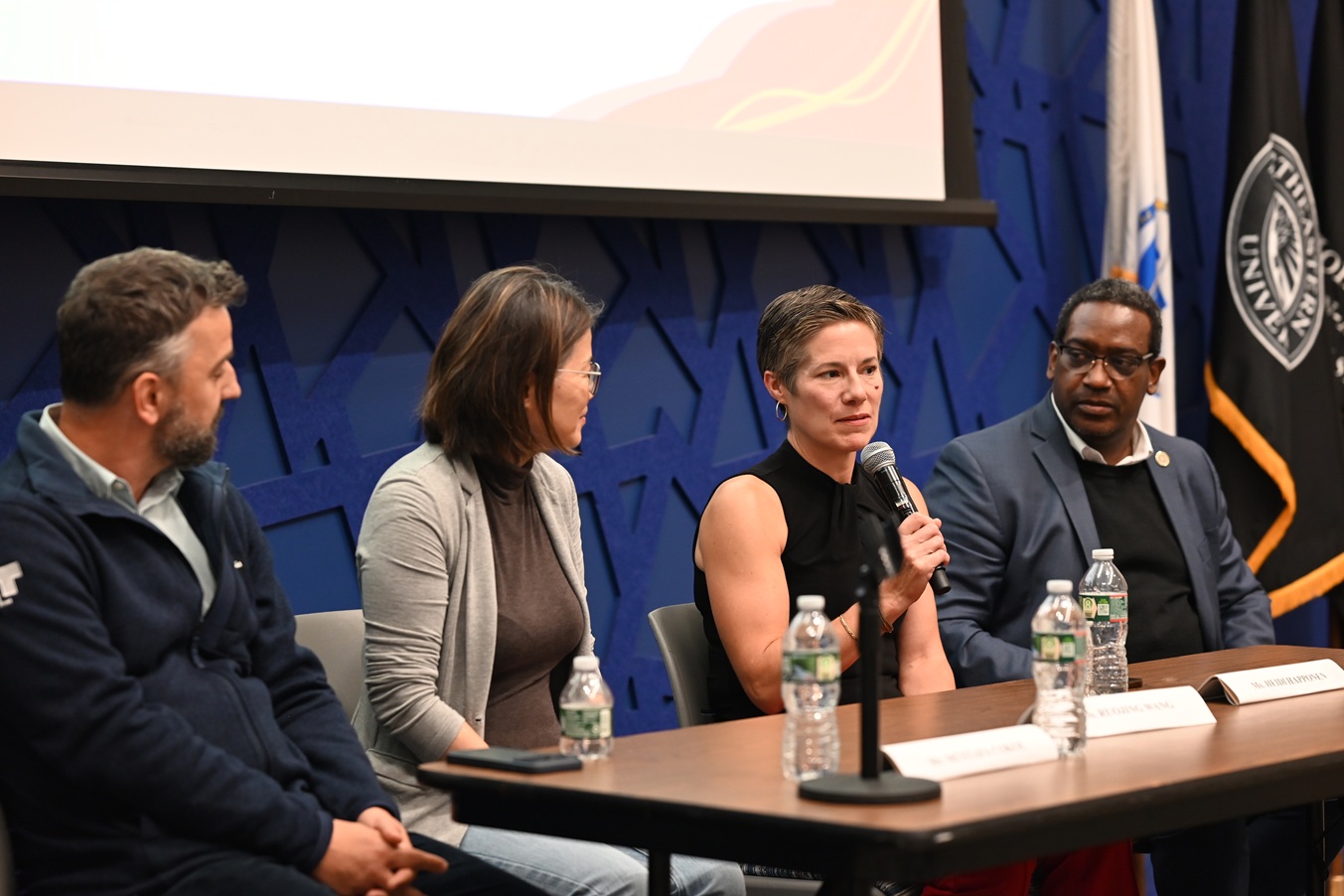
The board members described NUPM as a place to practice the discipline, not just study it.
“It gives us independence to exercise our power as students, especially as many of us are international students,” Ghosh said. “Here, we’re in a position where we can make decisions, study the market, plan what we want to achieve, and see tangible results.”
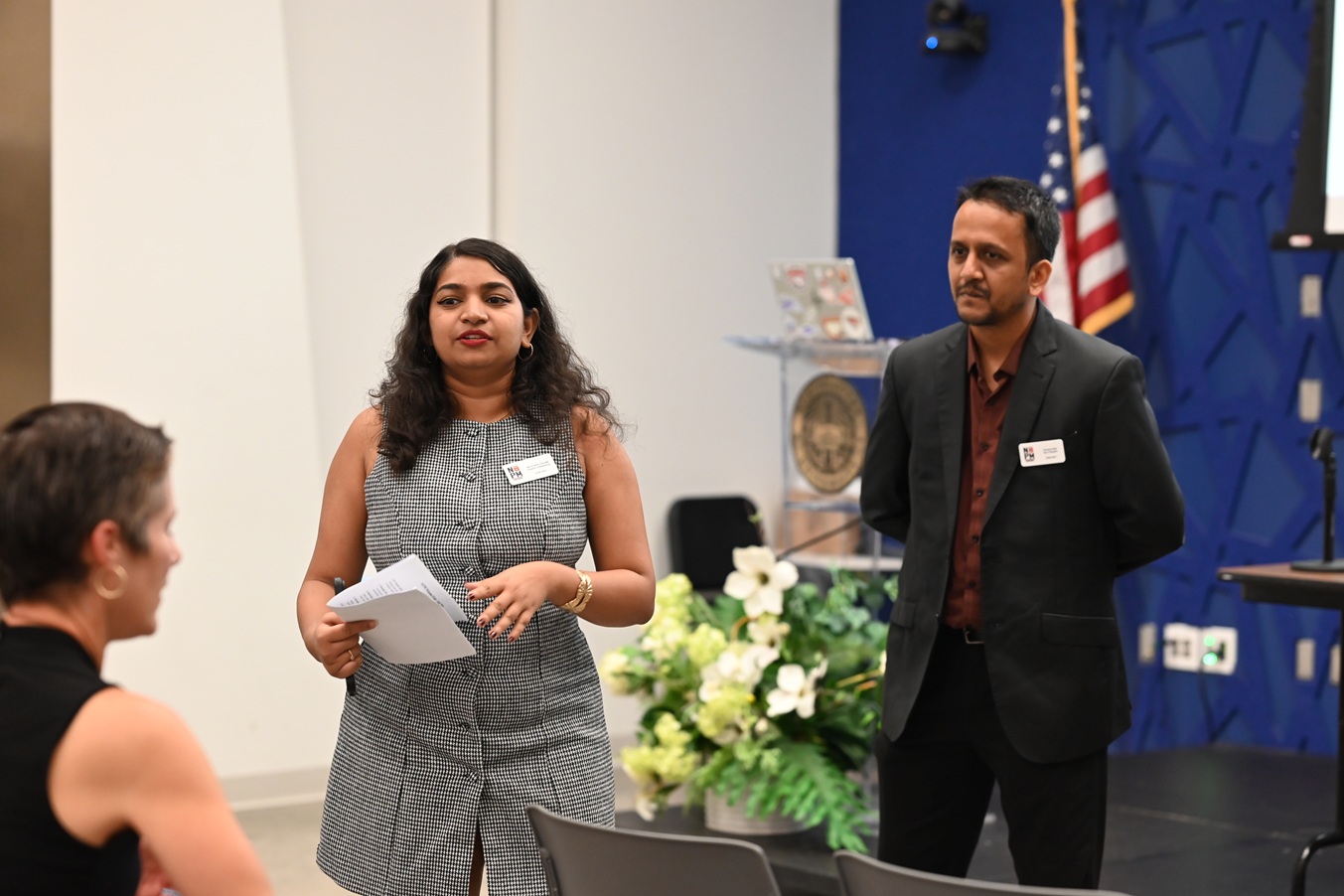
Raman, the club’s director of events, joined as a regular member first. What she saw in NUPM’s case studies, workshops, and networking events convinced her to join the board, where she now puts her hospitality background to work planning large-scale events. One could argue she’s project managing the project management club.
For Patel, the value is access. Class time with faculty is limited to a few hours a week, but club events create space for more personal connections with professors and the industry professionals NUPM invites. “It breaks down a barrier that somehow exists in the classroom,” he said.
That connection is part of why Jaques Alexis, Project Management Professor and NUPM’s faculty advisor, got involved. “I’ve spent over 20 years managing projects, and the lessons that stuck with me didn’t come from a textbook. They came from the people I worked alongside,” Alexis said. “NUPM gives students a place to practice the parts of project management that are hardest to teach: leading a team, working with stakeholders, and delivering when things don’t go to plan. As a professor, I teach the frameworks. As an advisor, I get to watch students put them to work.”
Several board members described giving back what the club first gave them. Ghosh, now assistant director of events, found classmates and friends at NUPM’s welcome event last year. Motiwala found a sense of belonging. “I received something, and I want to give back to the community,” she said. “What I’ve learned from my projects is very different from what Devang has faced in stakeholder management. We learn from each other and build ourselves as project managers.”
“NUPM gives students a place to practice the parts of project management that are hardest to teach.”
Jaques Alexis, Project Management Professor and NUPM Faculty Advisor
Building something that lasts
The current board inherited an established organization, and members are candid about what they want to change. Raman said previous years saw heavy turnover and work that wasn’t always done systematically. Her goal for the year ahead is to put a lasting structure in place for the team.
The board is also expanding NUPM’s programming beyond workshops and networking toward more educational sessions, including peer-led trainings and sessions with faculty and professionals on project management tools that students often have to teach themselves.
Patel and Ghosh both want to build a central resource hub: a place where current and future students can find guidance on certifications, faculty, and the questions that come up after a fast-paced orientation. “People are stuck in their first term of classes,” Ghosh said. “I want people to be able to say, just visit the NUPM website and you’ll find whatever you’re looking for.”
Motiwala sees a bigger mission: making the case for the profession itself. She has heard the skepticism firsthand, including people asking whether project management is something you actually learn and whether it’s a viable degree. She wants NUPM members to be able to answer those skeptics with confidence, and she plans to strengthen the club’s affiliation with the local PMI chapter as a bridge between students and working professionals.
Learning to lead
Running a student organization has also reshaped how the board thinks about leadership.
“In my earlier roles, I saw leadership as guiding, supporting, or training people,” Motiwala said. “Now I’m realizing that you lead by example. When people see you doing the thing you’re asking of them, it adds more value than just telling them what to do.”
Patel put it plainly: “You can manage the resources, but managing people and understanding their context remains the most difficult task in any project.”
Chimata has come to see empathy as part of the job. “You might give someone tasks, but they may not always be fully motivated, because there could be so many things going on in their personal life,” she said. “Maybe a leader is someone who can be like a friend, where you can say, ‘Hey, I might not be able to do this today.'”
“Managing people and understanding their context remains the most difficult task in any project.”
Devang Patel
A year from now, Ghosh hopes students see NUPM the way she came to see the Graduate Student Government during her time as a senator: as a group that always has an answer, or will find one. “I want project management students to look at us as that kind of resource,” she said.
Motiwala summed up the board with a metaphor. “Everyone on this team has their own thoughts, and together they create the most beautiful garden of thoughts.”
And if the board follows through on one idea floated during the conversation, a cooking competition that turns each step of a recipe into a project management lesson, that garden may soon come with a potluck.